


Cart
You have no items in your shopping cart
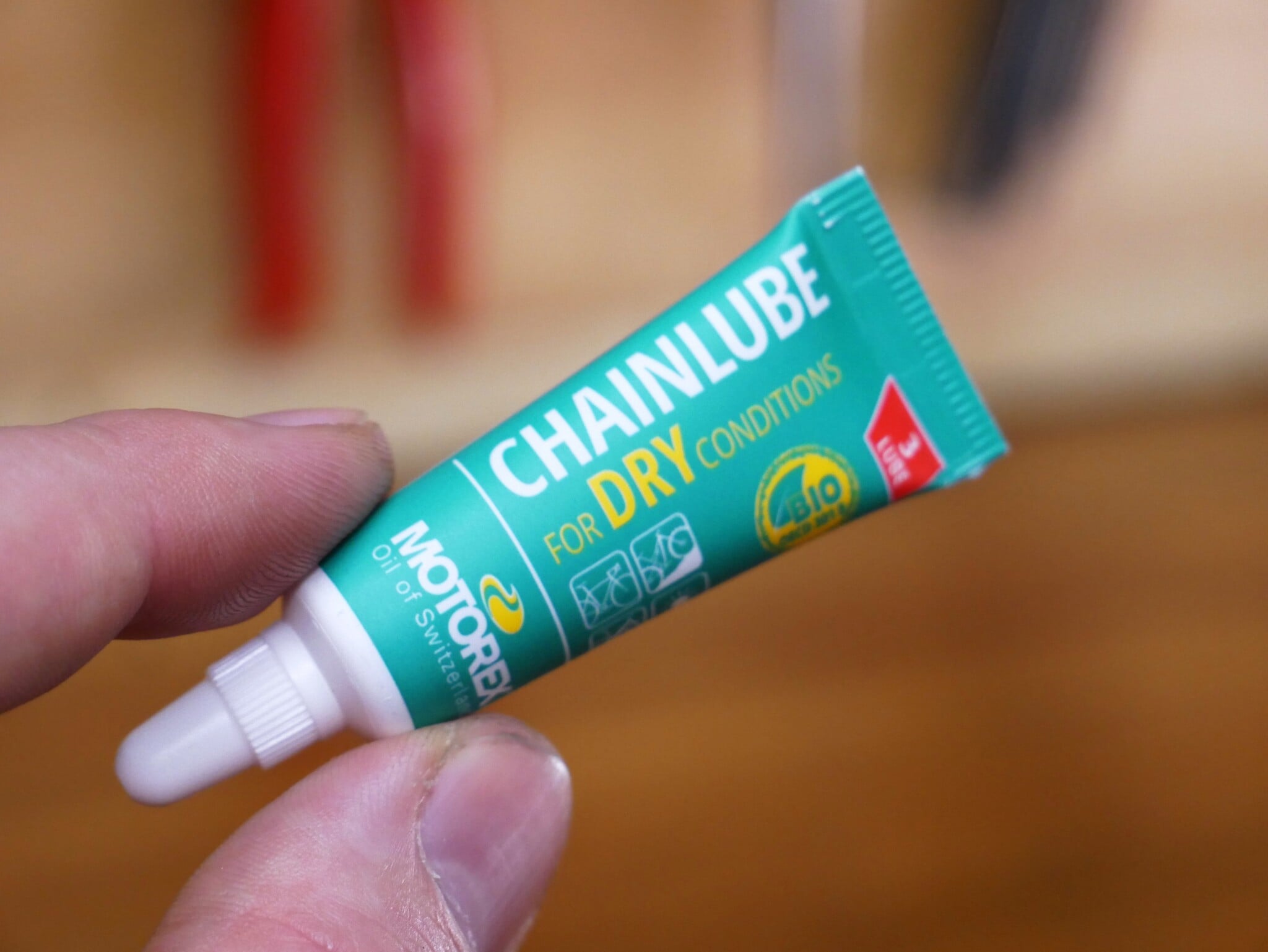
Keeping your bicycle chain clean and well-lubed is an essential part of regular bike maintenance, but which product should you use on your chain?
We all know that a clean and lubricated drivetrain is a happy drivetrain. Keeping your bicycle chain clean and well-lubed is an essential part of regular bike maintenance, and will not only extend the life of your chain, but reduce wear on other components as well.
But what product should you use once your chain is cleaned and degreased? There are wet lubes, dry lubes, and a whole range of newer chain treatments that are neither. Which is best for your bike? Depending on how you ride, when you ride, and your maintenance routine, there may be different answers to this question. The following post will (hopefully) de-mystify some of the more common chain lube choices.
Wet Lube
Wet-style chain lubricants are probably the most common, and the oldest type of lube available. Basically just a thin oil (although most are now synthetic with various polymer additives), wet lubes have the advantage of being durable, more water-resistant, and requiring less frequent application than other products. They are especially suited to all-weather, year-round riding where your chain may be exposed to the elements, salt, road grime, etc. Their main disadvantage is that they tend to gum up a bit, and can attract more dirt than other chain treatments, requiring more effort to clean and degrease your drivetrain.
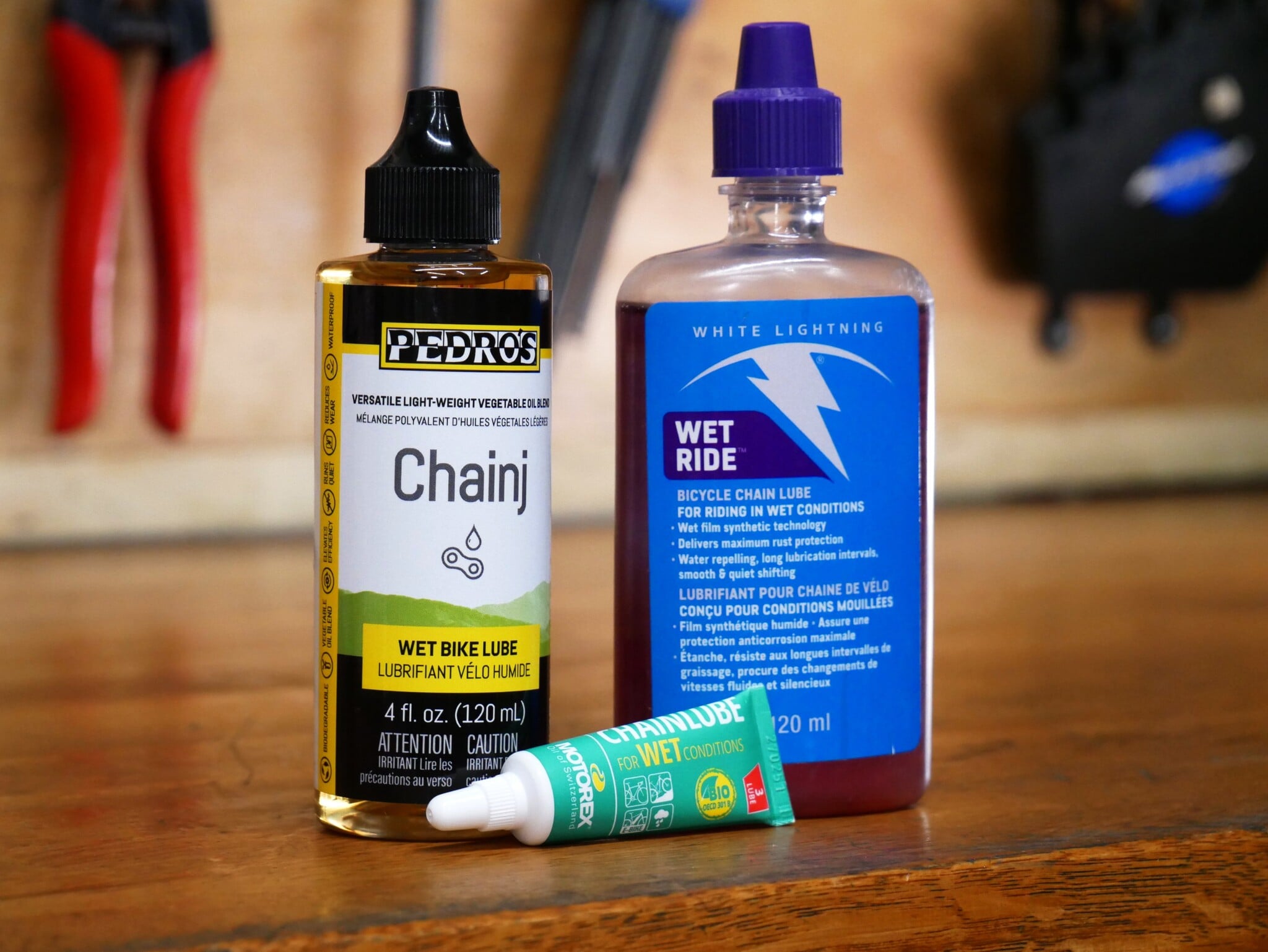
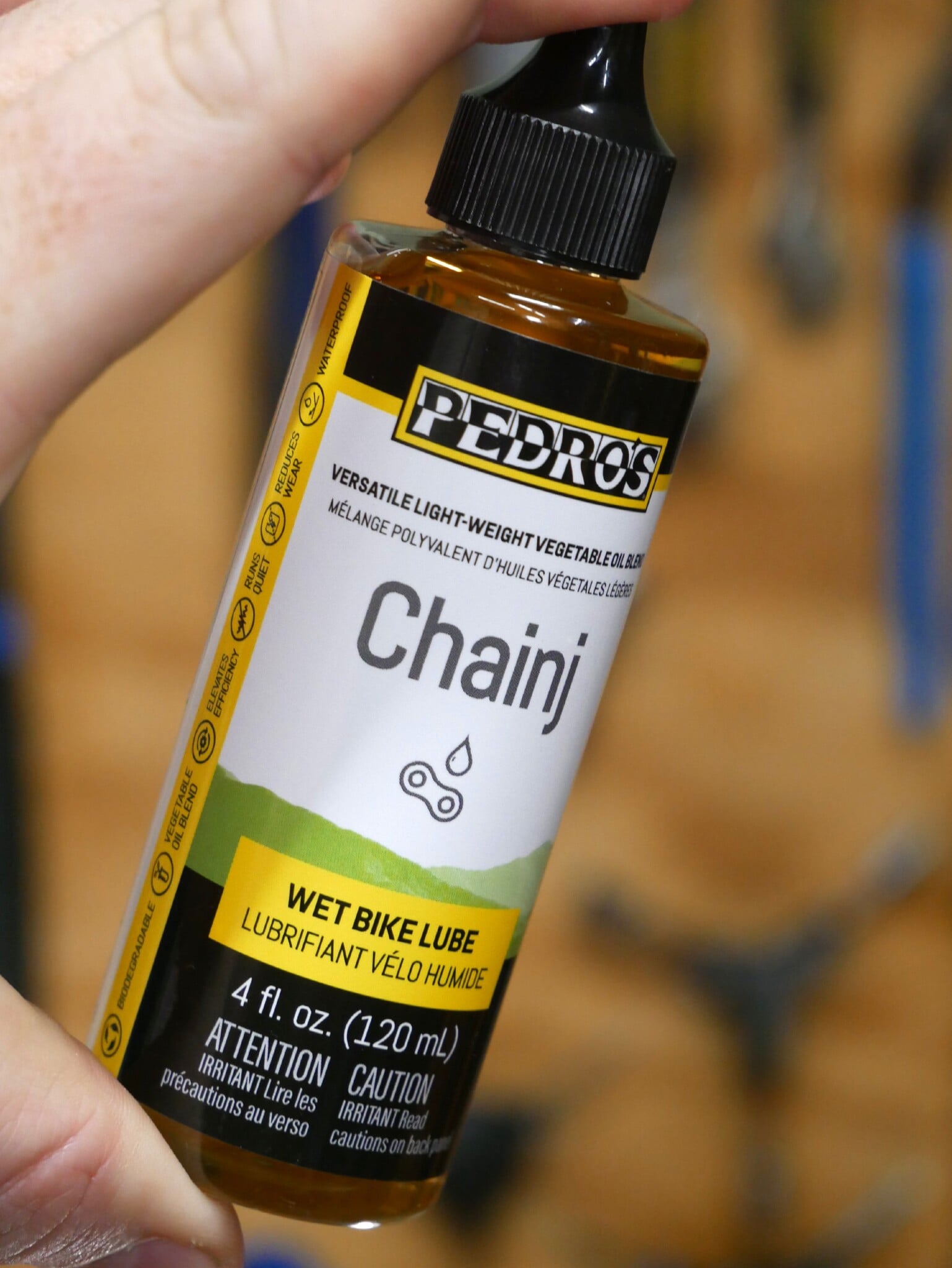
Both Finish Line and Muck-Off offer wet lube products, and these work reasonably well, although they tend to fall on the heavier, stickier side. We’ve found that Pedro’s Chainj is an excellent alternative to these more mainstream brands. It’s lighter than many other wet lubes, while still having excellent adhesive properties, which means that it will stay on your chain in different conditions without attracting too much dirt. As a bonus, Chainj is also one of the few lubricants that is advertised as non-toxic.
Dry Lube
“Dry Lube” is a bit of a confusing term, as it typically goes on wet and then dries to a thin film on your chain. Dry Lubricants offer the advantage of being lightweight and less sticky than their wet counterparts, which means that not only do they attract less grime, they actually shed dirt from the chain, keeping your drivetrain cleaner overall. The drawback to this is that they do not stay on the chain as well in wet weather, and are not as suitable as an all-conditions lubricant. What this means is that in anything other than dry conditions, you will need to apply lubricant to your chain more often, particularly after riding in the rain.
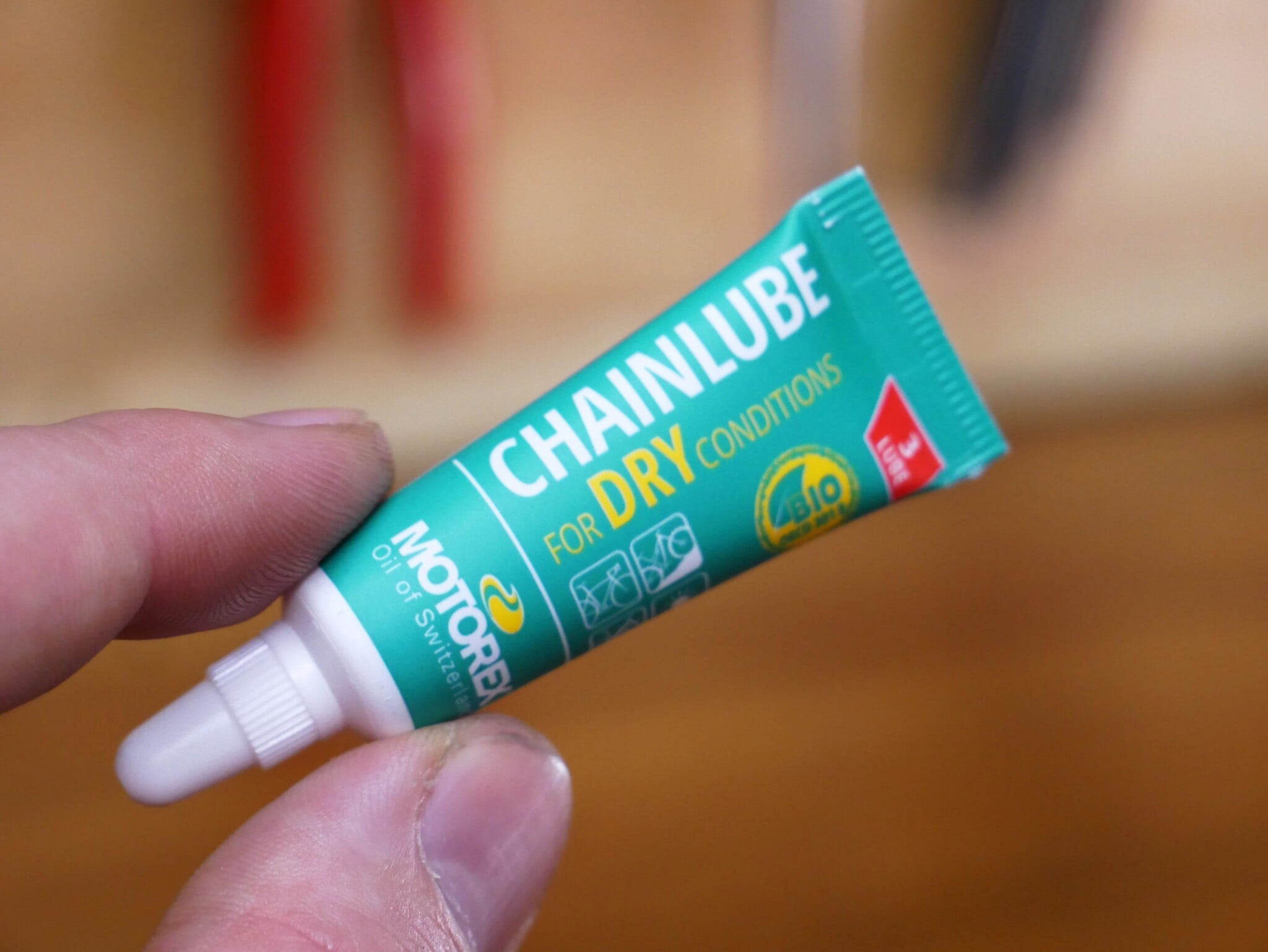
Again, both Finish Line and Muck-Off have decent dry offerings, but Motorex also sells a bicycle specific dry lube that comes highly recommended by several of our staff members. Additionally, it is available in a convenient 5ml mini-format that still provides enough for several applications.
Wax Emulsions
A more recent innovation in chain care, wax emulsions provide the same advantages as a dry lube, with even more dirt-shedding capability. These are typically sold as a liquid with a solid particulate in it. To apply a wax emulsion, shake the product well to uniformly distribute its solid component throughout the liquid, apply to your chain, and then let dry for several hours (or, ideally, overnight). The liquid component will evaporate, leaving a thin layer of wax on your chain which both reduces mechanical friction, and sheds dirt as it comes in contact with your chain. This helps to keep your chain and components extremely clean, but again, the disadvantage is that it needs to be applied more frequently than other products- typically after about 100-200km, or following a ride in wet weather.
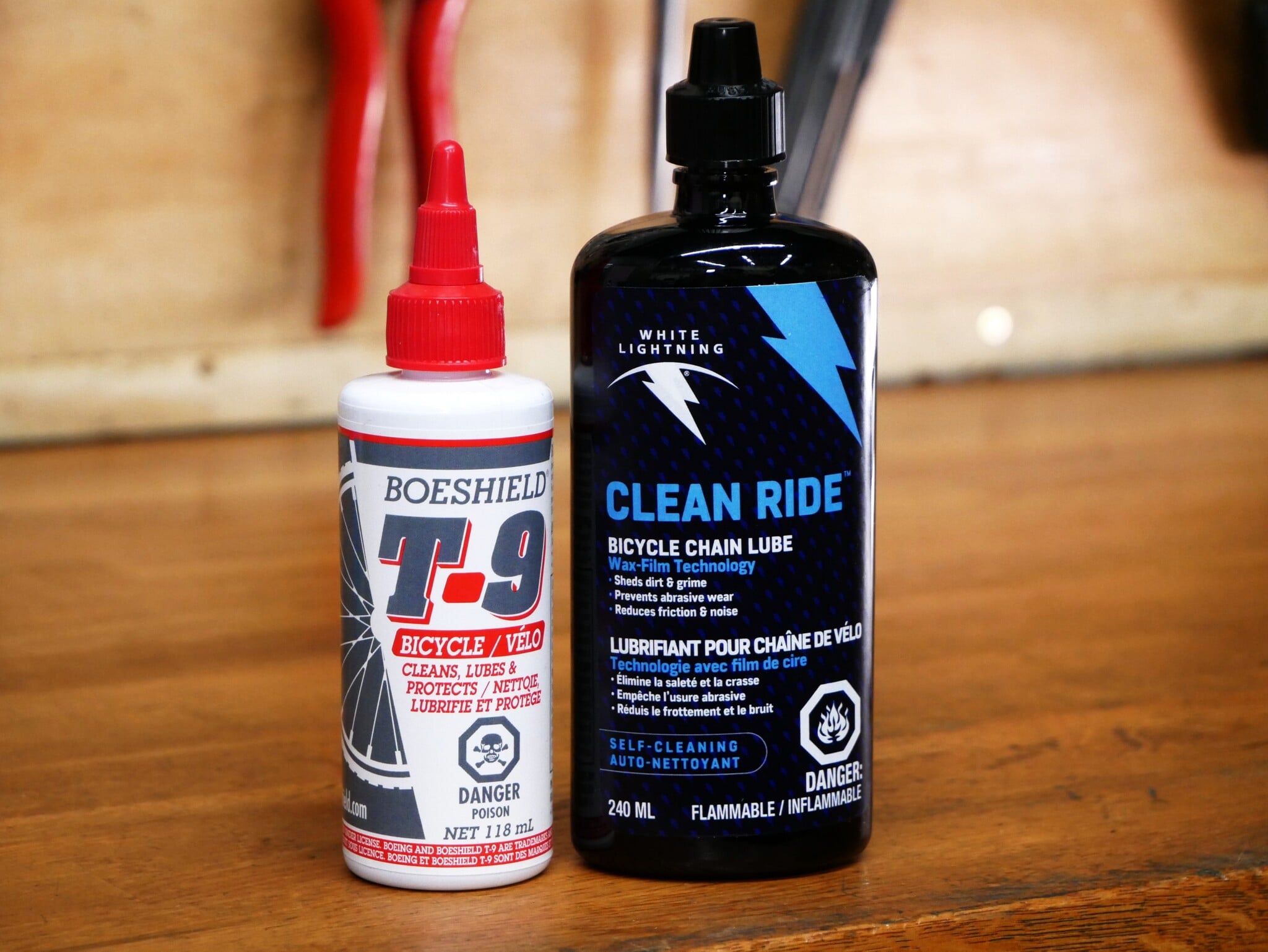
Developed by Boeing in the 1970s, Boeshield T-9 is a wax based lubricant and rust protector that has gained popularity among cyclists as a chain treatment. Available in both liquid and aerosol forms, it penetrates mechanical components well and provides a durable coating at the expense of being somewhat heavier than other products. A lighter-weight alternative, White Lightning Clean Ride sheds road dirt especially well but requires more frequent applications.
Penetrating Oil
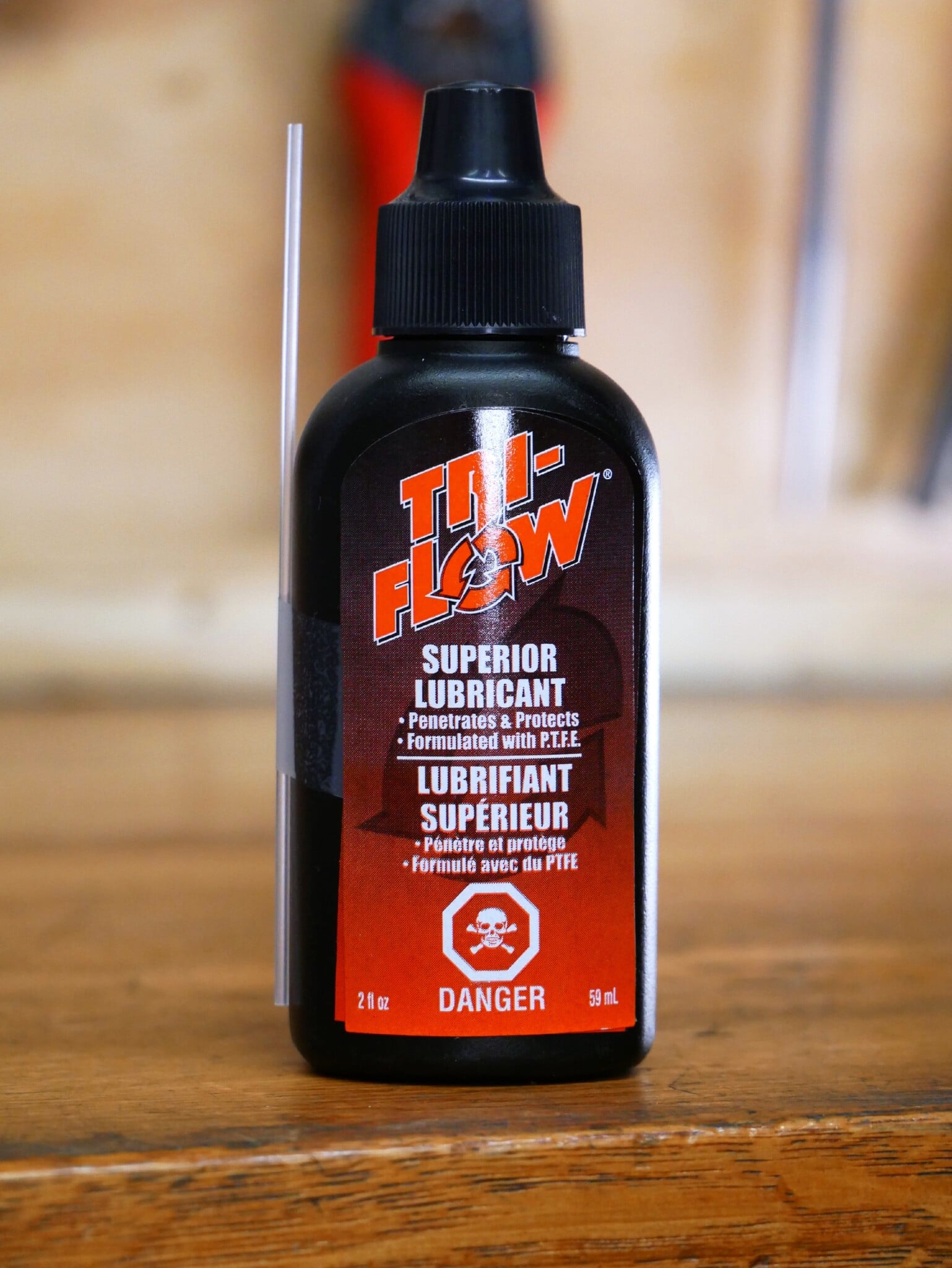
Penetrating oils are products developed to get deep into mechanical components that have seized or corroded, and release them. As such, they come in handy when you are dealing with a chain or other bike components that have started to develop corrosion, or are otherwise beginning to lock up. Several penetrating oils have also gained a following with cyclists as chain lubricants themselves, teflon-based Tri-Flow in particular. The main concern with these products is that they are often very lightweight, and have similar drawbacks to dry lubricants (mainly durability and need for frequent re-application).
Hot Wax Systems & Other Products
Hot wax chain treatments, such as those made by Silca, are becoming increasingly popular, particularly among road cyclists, including top-level pros. These involve heating wax and other additives in a special device, dipping your chain in, and then allowing it to dry. While these provide the most effective way to apply an evenly distributed coat of wax to your chain, they are also complicated, time consuming, and expensive. For most casual and utility cyclists, they are probably more than you need.
Likewise, graphite-based chain lubes also deliver a very lightweight and extremely low-friction chain coating, but they can be quite expensive as well, and are not as practical for the everyday cyclist.
Tips
Comments
Be the first to comment...